
Timing Belt Servicing for Cars
Keeping your engine running
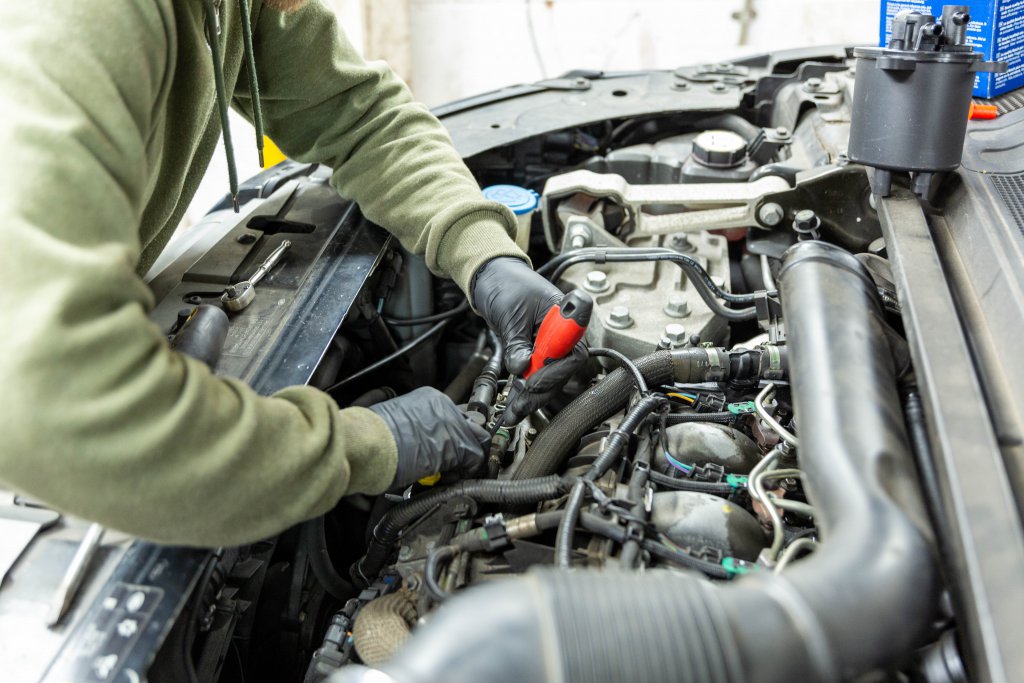
The purpose of a timing belt in your vehicle is to ensure that your internal combustion engine is running correctly. Making sure that the engine’s crankshaft and camshaft rotation are properly synchronised, it’s vital that your car timing belt is working well. If not, it can cause you major problems.
If a timing belt is damaged, it could eventually snap which could result in holes being poked in your engine. Over time, your entire engine could end up breaking apart if a timing belt has snapped, meaning a new engine will be required for your vehicle. This can be extremely costly, so it’s vital that you rectify the issue before it escalates to this stage.
Timing Belt Replacement In Nottingham, Mansfield & Derby
Signs that you might need a timing belt replacement include a strange ticking sound coming from your engine, difficulty starting the engine and exhaust issues including oil leaks.
At Ken's Autos, we can supply you with a timing belt kit and timing belt replacements that ensure your engine continues to perform to its maximum. Plus, our team of expert technicians will even fit them on your behalf – giving you peace of mind that your vehicle is in the best condition.
Operating across Nottingham, Derby and Mansfield as well as surrounding areas such as Newark and Grantham, simply get in touch with us today to find out more.
Why the timing belt matters
The timing belt, or cam belt, keeps the crankshaft and camshaft turning in step so that the valves open and close at exactly the right moment relative to the pistons. It is a rubber toothed belt, and unlike a chain it is designed to be replaced at intervals rather than to last the life of the engine.
On most modern engines — known as interference engines — the pistons and valves occupy the same space at different moments. If the belt snaps, that timing is lost instantly and the two can meet. The result is usually bent valves and often a damaged cylinder head or pistons, which is why a belt failure frequently costs more than the car is worth.
Replacement intervals are set by the manufacturer and vary widely by engine, commonly somewhere between 60,000 and 100,000 miles or every four to five years, whichever comes first. Age matters as much as mileage, because the rubber degrades whether the car is driven or not. Your handbook gives the figure for your specific engine, and it is worth checking rather than assuming.
Warning signs are not always obvious, but a ticking or slapping noise from the front of the engine, difficulty starting, or a rough idle are all worth investigating. Because the belt drives the water pump on many engines, the pump is usually replaced at the same time — the labour is already done, and a failed pump takes the belt with it.
Common questions
Timing belt questions
How do I know when my timing belt needs changing?
The interval is set by your vehicle manufacturer and is listed in the handbook. It is normally given as a mileage and an age, and whichever comes first is the one that counts.
What happens if a timing belt breaks?
On most modern engines the valves and pistons collide, which typically bends valves and can damage the cylinder head. Repair is usually far more expensive than replacing the belt on schedule.
Does my car have a belt or a chain?
It depends on the engine. Timing chains are designed to last much longer and are not on a fixed replacement schedule, though they can still wear. If you are not sure which your car has, we can check for you.
Should the water pump be changed at the same time?
On engines where the timing belt drives the water pump, yes — it is standard practice. The pump is only accessible with the belt off, so doing both at once avoids paying for the same labour twice.
Related services
You might also need
Ken’s Auto Spares · Bulwell
Talk to us about it
Give us a ring, or drop in — 2-4 Carey Road, Bulwell, NG6 8AT.